
AI coding
MarsX
MarsX is a revolutionary dev tool that unites AI, NoCode, traditional Code, and MicroApps into a single cohesive platform.
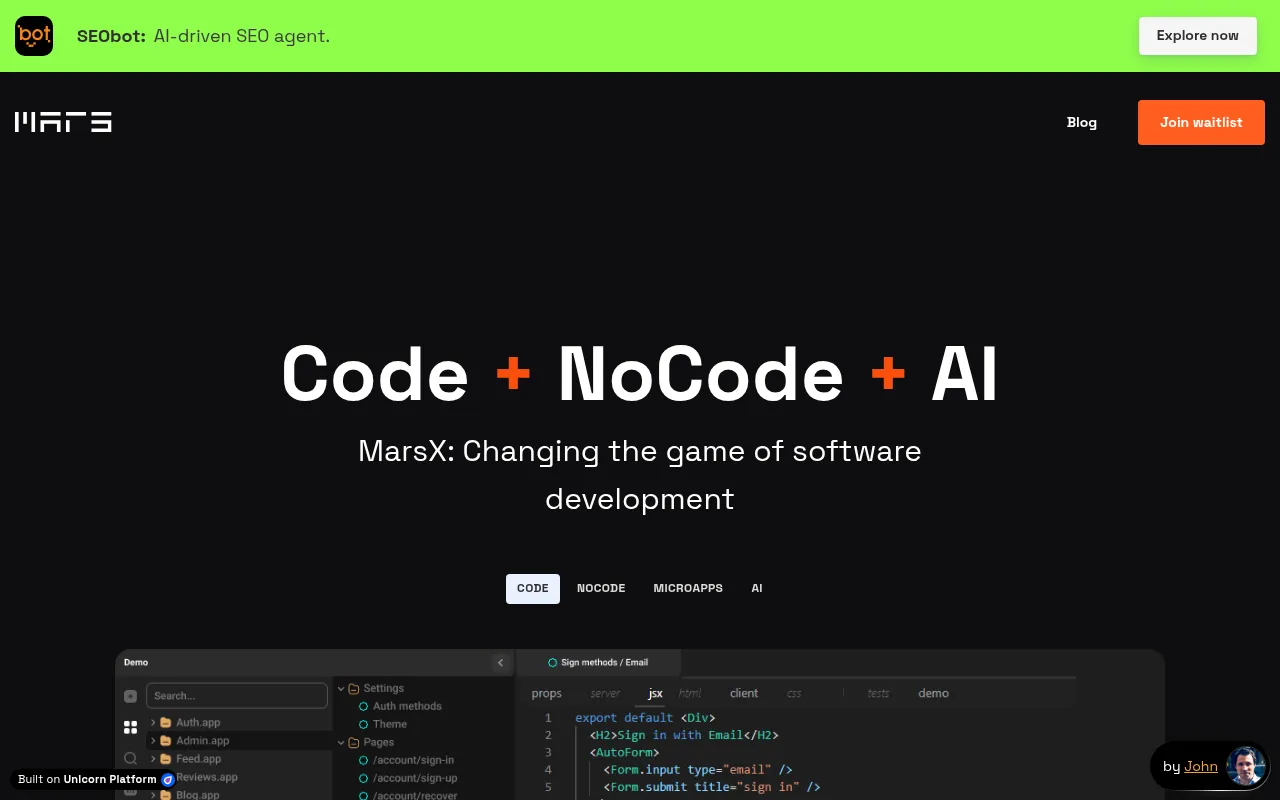
What is MarsX?
MarsX is a revolutionary dev tool that unites AI, NoCode, traditional Code, and MicroApps into a single cohesive platform.Its core mission is to enable developers to build fully functional SaaS products in days by leveraging a vast library of reusable MicroApps, drastically reducing development time from months or years to just days.
Unlike traditional No-Code platforms, MarsX allows projects to start with zero coding skills using pre-built modules.When business needs outgrow these presets, users can seamlessly switch to a full-scale coding IDE for custom logic without losing any previously built data or structure.This hybrid approach ensures a smooth transition from prototype to production.
The platform features over 1,000 MicroApps built by community developers, covering scenarios like NFT marketplaces, social networks, video streaming, and peer-to-peer markets.The MarsX engine is fully open-source and supports self-hosting, giving users complete control over their data and infrastructure.
Key features
- Seamless No-CodeStart with No-Code and switch to a full JS/TS IDE for deep customization at any time, preserving all data and logic without rebuilding.
- Vast MicroApp LiAccess 1,000+ ready-to-use MicroApps including NFT marketplaces, Uber-like services, social networks, and video streaming, covering frontend, backend, and admin panels.
- All-in-One Full-Features a robust web-based IDE with integrated Git version control, JavaScript/TypeScript support, and both No-Code and High-Code interfaces.
- Fully Open SourcThe Mars engine is open-source (Apache 2.0) on GitHub, allowing deployment on local machines, private servers, or closed networks with no vendor lock-in.
- Full Data OwnersAll data resides in your own databases (SQL/NoSQL) or cloud storage, ensuring complete control over privacy and GDPR compliance.
- High DevelopmentReduce code writing by up to 90% through MicroApp reuse, significantly lowering labor costs and accelerating time-to-market.
How to use it
- Visit the MarsX website and join the waitlist or request access.
- Browse the MicroApp marketplace and select templates that fit your project needs (e.g., e-commerce, social, or content platforms).
- Use the No-Code interface to configure basic features and layouts for rapid prototyping.
- Switch to Code mode if custom logic is needed, and write JavaScript/TypeScript in the built-in IDE.
- Connect your own database or cloud storage account to ensure persistent data storage.
- Deploy your application to Mars Cloud or your own private server.
Where it fits
- Rapid Niche SociUse social network MicroApps to quickly build community platforms with e-commerce features for specific groups like book lovers or professionals.
- Peer-to-Peer SerLeverage Uber-like MicroApp templates to rapidly launch platforms connecting buyers and service providers (e.g., tutors, designers) with payment and chat support.
- Digital Asset TrUtilize NFT marketplace MicroApps to quickly launch digital collectible platforms supporting auctions, spot buying, and multi-cryptocurrency payments.
Pricing and free quota
Pricing and any free quota follow the official site.
Who it is for
- Startup founders looking to validate ideas quickly
- Full-stack engineers seeking higher development efficiency
- Enterprise teams requiring self-hosted deployments
- Indie developers and freelancers
FAQ
Is MarsX a No-Code tool or a Code editor?
It is both.It allows you to build quickly in No-Code mode and seamlessly switch to a full-code IDE for customization when needed, without rebuilding the project.
Is there a risk of vendor lock-in?
No.The Mars engine is fully open-source, allowing you to deploy it on your own servers, local machines, or closed networks, giving you full control over infrastructure.
Who maintains the MicroApps?
MicroApps are built and maintained full-time by external professional developers who earn revenue from them, ensuring continuous updates, bug fixes, and new features.
Where is my data stored?
Data is stored in your own databases.You can connect your own Amazon account or other SQL/NoSQL databases, ensuring data privacy and security.